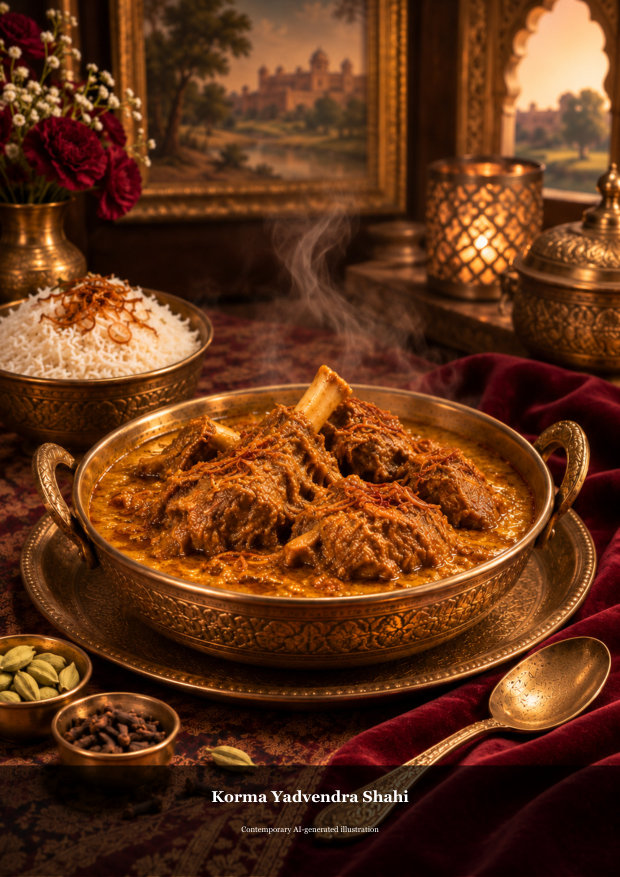
Royal Pots: Kormas & Meat Curries
Korma Yadvendra Shahi
AW-R001 · Book page 27
Archival transcription · Untested
Preserved recipes, family stories and the enduring art of hospitality—from Awagarh and Agra to the travelling camps of the Guna years.
EXPLORE THE COLLECTION →
A family recipe preserves a way of working: onions browned with care, a masala patiently reduced, a covered pot left on a gentle fire. This illustrated collection brings that practical inheritance together with handwritten records, field papers and family photographs associated with Rajkumar Dharampal Singh of Awagarh.
The story moves between Awagarh in Etah district, Castle Grant in Agra, and camps associated in family accounts with the Guna years in Madhya Pradesh. These settings remain distinct. The collection does not establish that every recipe was written in one place or served on a particular expedition.
Kormas and kaliyas, skewered meats, chicken preparations, keema and chutneys sit beside a separately presented historical game collection. The revised book brings together 61 recipe records, with original measures and source uncertainties kept visible.
AW-R001 · Book page 27
Archival transcription · Untested
AW-R014 · Book page 43
Archival transcription · Untested
AW-R033 · Book page 99
Archival transcription · Untested
The story continues at Awagarh Farms in Agra. According to the family account preserved in the book, the farm is owned by Rajkumar Dharampal Singh’s grandsons, who welcome overseas visitors to dinner and share the family’s hospitality with a new generation of guests.
The account names Yashvendrapal Singh as a host and describes cooking sessions followed by a shared meal. Food becomes a starting point for conversation about ingredients, family recipes and the household in which they have been kept.
The recipes retain words such as bhunao, dum and dhungar, alongside measures such as seer and tola. Missing quantities remain marked. Cooking times, yields and test results have not been invented to fill gaps.
These are archival transcriptions, not kitchen-tested modern adaptations. Read each ingredient list with its method and editorial notes. Historical game recipes are presented as records of another period, not contemporary wildlife sourcing advice.
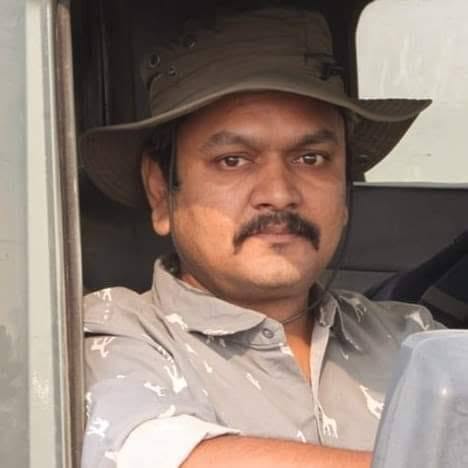
Bhumendrapal Singh of Awagarh is a heritage enthusiast and entrepreneur from the erstwhile royal family of Awagarh, Uttar Pradesh. As the founder of IndiaRoyalFamilies.com, he works to document the histories, traditions and stories of India’s royal families.
The Awagarh Cook Book is a personal endeavour inspired by the handwritten recipes and culinary legacy of his grandfather, Rajkumar Dharampal Singh. It brings together preserved flavours and family records so that their stories can continue through reading, conversation and cooking.
Read the complete 184-page illustrated book, including the family archive, culinary collection, Awagarh Farms chapter, recipe index and author biography.

