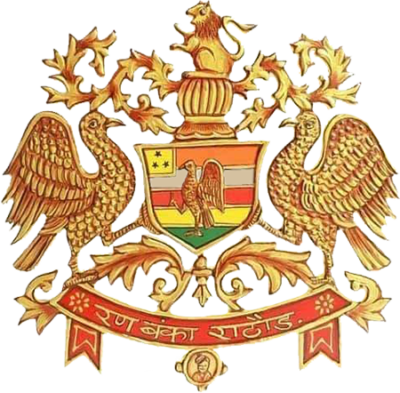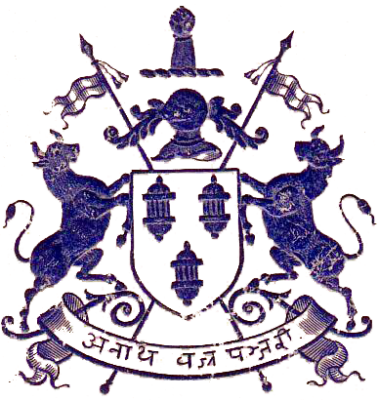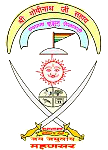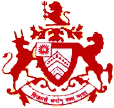
The Coat of Arms of Banswara is the heraldic emblem of a princely state in the Rajputana region (present-day Rajasthan). It represents the lineage, authority and identity of the ruling house that held it.
Historical Background
Banswara was a princely state of southern Rajasthan, forming the eastern part of the Vagad region, which borders Gujarat and Madhya Pradesh. In 1901 the state covered about 4,160 square kilometres with a population of 165,350. Its rulers bore the title of Maharawal and belonged to the Guhilot-Sisodia line, sharing their ancestry with the houses of Dungarpur and Mewar.
Foundation after Khanwa
The state was born out of the Battle of Khanwa in 1527. Rawal Udai Singh of Vagad fought alongside Rana Sanga of Mewar against Babur and was killed in the battle. His territories were then divided between his two sons: the western part became Dungarpur and the eastern part became Banswara, which went to Jagmal Singh, the first Maharawal of Banswara.
The Name
Tradition says that Jagmal defeated and killed the Bhil chief Bansia (or Wasna) who had ruled the area, and the state was named after him. Others link the name to the bamboo (bans) forests that once covered the region.
Land of a Hundred Islands
Banswara is known as the “City of Hundred Islands” because of the many islands in the Mahi river that flows through it, and the Mahi Bajaj Sagar dam now forms a large lake in the district. With its many ancient temples and natural beauty, the area is also called “Lodhi Kashi”. Its Vagdi culture blends Gujarati, Malwi, Rajasthani and Mewari traditions, and the region has a large tribal population, especially Bhils.
British Period and Accession
Banswara entered treaty relations with the British in 1818 and enjoyed a 15-gun salute. The state issued its own coinage, including silver rupees in the name of Maharawal Lakshman Singh. After Independence it acceded to India and was merged into the United State of Rajasthan in 1948–49. The Banswara coat of arms reflects the solar heritage of the Guhilots and the state’s origins on the battlefield of Khanwa.
History of the Emblem
European-style armorial bearings for the Indian princely states were largely formalised for the Imperial Assemblage held at Delhi in 1877, when banners bearing the arms of each state were presented to the rulers. The designs blended traditional Indian symbols – the sun and moon of the Suryavanshi and Chandravanshi lines, family deities, sacred animals, weapons and regalia – with the structure of Western heraldry. As a 15-gun salute state, Banswara held a recognised place in the precedence of the princes of India. These arms remained in official use on seals, coins, stamps, buildings and state documents until the princely states acceded to India and Pakistan after 1947.
Reading the Coat of Arms
A typical Indian royal coat of arms is made up of a few traditional elements:
- Shield (escutcheon) – the central field carrying the principal symbols of the house.
- Crest – the device placed above the shield, often a crown, a deity, a bird or an animal.
- Supporters – figures on either side of the shield, frequently horses, lions, tigers, elephants or mythical beasts.
- Motto scroll – a banner below the shield bearing a motto or invocation, usually in Sanskrit, Hindi, Persian or a regional language.