
The Coat of Arms of Ichalkaranji is the heraldic emblem of a jagir in the Deccan & Maharashtra region (present-day Maharashtra). It represents the lineage, authority and identity of the ruling house that held it.
Historical Background
Ichalkaranji is a town in the Panchganga valley of Kolhapur district, Maharashtra, about 29 kilometres east of Kolhapur city. In the princely era it was the seat of a jagir under the state of Kolhapur, ruled by the House of Ichalkaranji, whose chiefs used the family name Ghorpade.
The House of Ichalkaranji
The jagirdars of Ichalkaranji were among the leading feudatories of Kolhapur, the senior branch of Chhatrapati Shivaji’s line. The family is noted in history for the prominent role played by its women in the affairs of the estate; Anubai, wife of Venkat Rao, was an especially influential figure in the 18th century.
Narayan Rao Babasaheb
In 1892 Narayan Rao Babasaheb became the eighth ruler of Ichalkaranji. He was a modernising chief who encouraged art and Indian classical music, funding scholarships and exhibitions, and travelled widely in South and Southeast Asia and three times to England and Europe.
The Manchester of Maharashtra
Narayan Rao’s greatest legacy was the transformation of Ichalkaranji into an industrial centre. He gave weavers subsidies and free land, and in 1904 encouraged Vitthalrao Datar to install the town’s first power loom. Impressed by the cooperative economy he observed in Denmark, he promoted cooperative ownership among the weavers. The textile industry grew rapidly, and in 1962 the Deccan Co-operative Spinning Mill – described as the first cooperative spinning mill of its kind in Asia – was founded here. Ichalkaranji is today known as the “Manchester of Maharashtra”.
Integration
With Kolhapur, Ichalkaranji merged into the Indian Union in 1949 and became part of Bombay State and later Maharashtra.
The Coat of Arms
The Ichalkaranji coat of arms represents a Maratha jagirdari house of the Kolhapur state whose enlightened patronage turned a small town into one of India’s great textile centres.
History of the Emblem
From the late 19th century onward, many thikanas, talukas, jagirs and great estates followed the princely states in adopting heraldic achievements. These emblems were displayed on gateways, palace facades, carriages, silver, letterheads and seals, and often echoed the arms of the parent state or clan, adapted with family-specific symbols.
Reading the Coat of Arms
A typical Indian royal coat of arms is made up of a few traditional elements:
- Shield (escutcheon) – the central field carrying the principal symbols of the house.
- Crest – the device placed above the shield, often a crown, a deity, a bird or an animal.
- Supporters – figures on either side of the shield, frequently horses, lions, tigers, elephants or mythical beasts.
- Motto scroll – a banner below the shield bearing a motto or invocation, usually in Sanskrit, Hindi, Persian or a regional language.
Sources
Historical timeline
A selection of dated events and lives from the cited sources. Life dates are not reign dates; gaps do not imply uninterrupted rule.
Royal Lineage & Family Tree
Ichalkaranji
Ichalkaranji was a Ghorpade jagir associated with the Maratha polity.
This is a partial research extract, not a complete family register. Titles are historical or customary. Dates are identified as reigns or life dates where the source supplies them.
Family relationships
Open or close a descendant branch to explore. People without a documented connection remain separate. A person linked to multiple parents appears in each branch.
Chronological lineage · text view
Selected people in source chronology; this list does not imply direct descent or uninterrupted rule.
Sources & research notes
Research checked 10 November 2026. Interpretations remain subject to historical review; specialist compilations and family accounts may require independent corroboration.
Internet research checked the named estate and family; cited sources support only the displayed selected relationships. No continuous ancestry is inferred across missing generations.
Royal Family & Heritage Pictures
A sourced picture selection for this house is still being researched. Images are added when their subjects and association can be established.
Related Video Gallery
Watch & explore · 5 YouTube videos
Direct house and place coverage is prioritised. Wider dynasty, regional or Indian royal-heritage films are labelled individually. Video claims and availability remain the publisher’s responsibility.
YouTube player loads when selected.
Exploring Hasta Shilpa Heritage Village | Secrets of Mudhol Palace & Royal Indian History | EP 02
SHUTTERBOX FILMS
Dynasty/clan context: Ghorpade. This film concerns another house or site and does not establish a direct family relationship.
Watch on YouTube ↗
YouTube player loads when selected.
Interview (English) – HH Maharaja of Kolhapur – A Little Poland in India, The Valivade Chapter
AakaarFilms
the Deccan & Maharashtra royal-heritage context. This film is not presented as footage of this individual estate.
Watch on YouTube ↗
YouTube player loads when selected.
Chatrapati Sambhaji Maharaj : छत्रपतींची शाही स्वारी | Marathi News
News18 Marathi
the Deccan & Maharashtra royal-heritage context. This film is not presented as footage of this individual estate.
Watch on YouTube ↗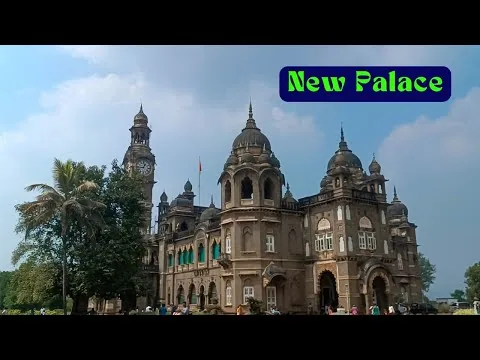
YouTube player loads when selected.
Kolhapur’s New Palace: Explore Maharashtra’s Royal Heritage!
Pravrutha
the Deccan & Maharashtra royal-heritage context. This film is not presented as footage of this individual estate.
Watch on YouTube ↗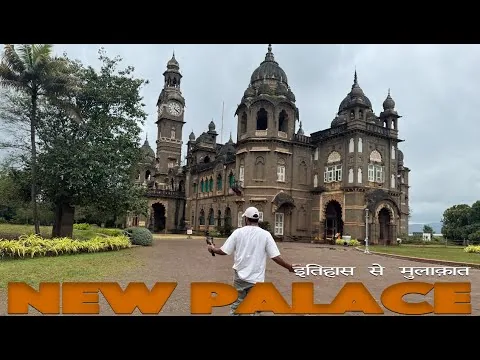
YouTube player loads when selected.
New Palace Kolhapur | इतिहास से मुलाक़ात | Exploring the Royal British-Era Architecture | #newvlog
Mohit kadian
the Deccan & Maharashtra royal-heritage context. This film is not presented as footage of this individual estate.
Watch on YouTube ↗Page context sources · 1
Research checked 10 November 2026. These references support the facts, emblem descriptions and timeline above. Genealogy references remain in the family-tree section.
Selected sourced facts only. Collection classifications are legacy editorial labels; uncertain fields are omitted. No symbolic meaning is inferred from generic heraldic motifs.