
The royal families of Awadh helped shape a cultural world whose influence survives in architecture, performance, language and food. Lucknow is its best-known centre, but Awadh’s history also involves Faizabad and the landed households of a wider region. Its legacy is richer when patrons, artists, cooks and craftspeople are considered together.
From a court to a cultural landscape
The nawabs and later kings of Awadh operated in a changing political environment. Mughal connections, regional authority and growing East India Company intervention all formed part of that history. Courtly culture developed through those relationships, not in isolation from them.
Royal patronage could create commissions and employment, but cultural production depended on skilled people. Musicians, poets, architects, embroiderers and household staff deserve a place in any account of what a court made possible.
Architecture in Lucknow
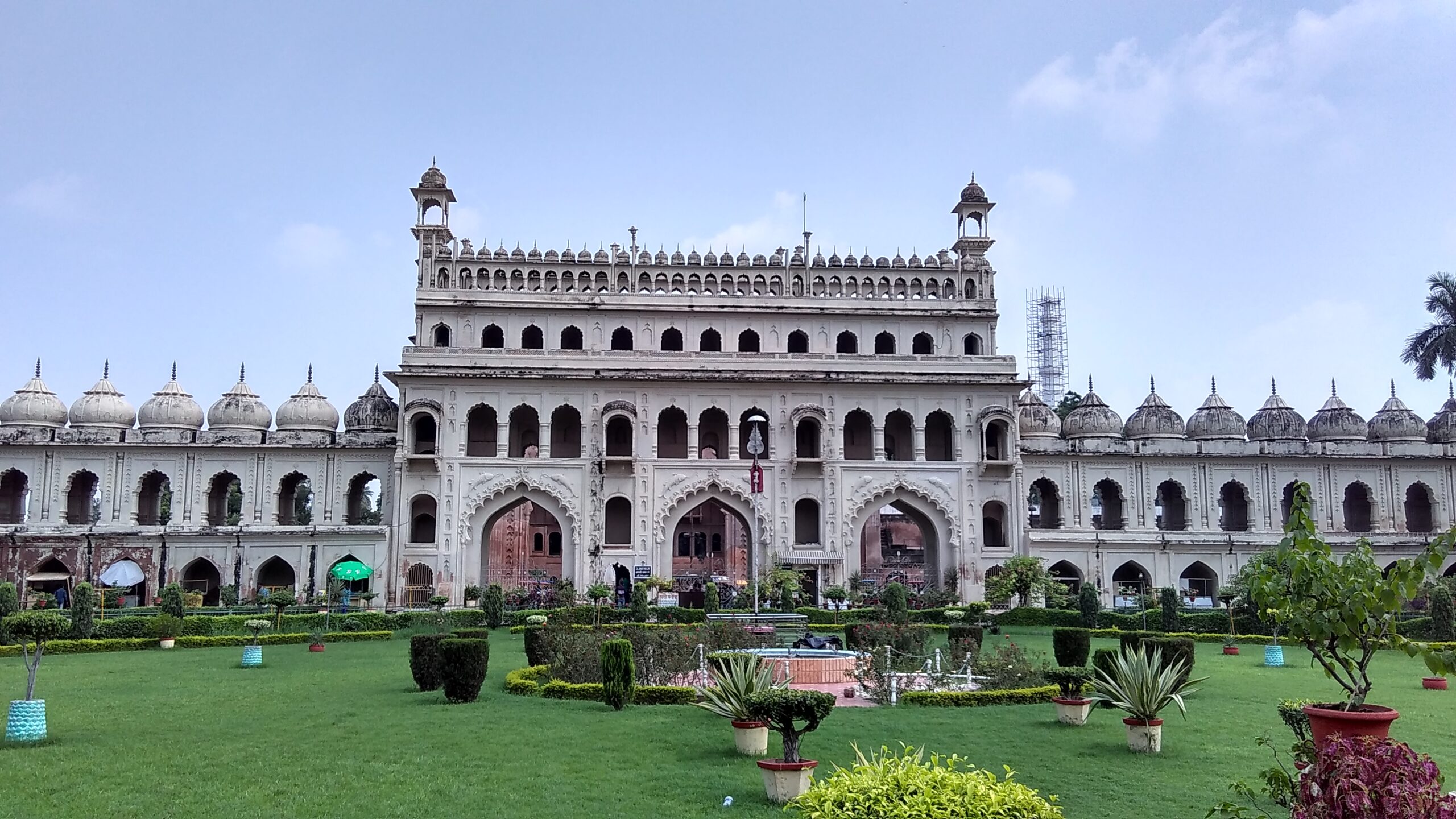
The district’s historical overview describes the city’s mix of Mughal-derived, regional and European architectural influences. Buildings can be read as expressions of devotion, residence, political ambition and public presence. Distinguishing these purposes is more useful than labelling every impressive structure a palace.
The Chhota Imambara, commissioned by Mohammad Ali Shah, is a religious and funerary monument. Its continuing religious meaning matters alongside its visual appeal. Visitors should observe local etiquette and avoid treating an active sacred setting as an unrestricted photographic backdrop.
Wajid Ali Shah and performance
Wajid Ali Shah is remembered as a writer, performer and patron. His cultural interests challenge colonial caricatures that reduced the court to a story of indulgence. The Royal Collection Trust’s interpretation of an Ishqnama painting provides a specific object through which to approach his court and Begum Hazrat Mahal’s place in its later history.
Paintings and texts need interpretation rather than literal acceptance as complete portraits of court life. They were created for particular audiences and can present authority, intimacy or refinement in carefully chosen ways.
Cuisine beyond a royal origin story
Incredible India’s Lucknow food guide connects the city’s culinary inheritance with nawabi patronage. Today that inheritance is encountered in restaurants, neighbourhood kitchens and street food as well as formal dining.
Claims that one ruler invented a dish, or that one kitchen holds its only authentic recipe, deserve caution. Food changes through migration, ingredients and the work of successive generations. Ask about technique and local variation rather than expecting one fixed royal menu.
Disruption is part of the legacy
The British annexation of Awadh and the upheaval of 1857 altered the court’s world. Begum Hazrat Mahal’s resistance is an essential counterpoint to accounts that focus only on monuments and manners. A responsible heritage narrative includes political loss and contested authority alongside artistic achievement.
A thoughtful way to visit
Combine a monument visit with a guided walk, a performance or a conversation with a working artisan. Ask guides to distinguish documented facts from popular stories. Allow the region’s contemporary residents to be participants in its culture rather than scenery for an imagined royal past.
Frequently asked questions
Is Awadh the same as all of Uttar Pradesh?
No. Awadh is a historical region within the larger geography of today’s state.
Is all Lucknow heritage royal?
No. Religious communities, merchants, artisans and many other groups have also shaped the city.
Sources and further reading
- district’s historical overview
- Chhota Imambara
- Royal Collection Trust’s interpretation of an Ishqnama painting
- Incredible India’s Lucknow food guide
Continue exploring royal heritage
- The Royal Families of Uttar Pradesh: A History of Its Princely Houses
- Royal Architecture of Uttar Pradesh: Forts, Havelis and Palaces
- Royal Cuisine: Recipes and Traditions from Historic Kitchens
Research and reference links checked 4 November 2026. Visitor access and commercial arrangements can change; confirm with the relevant institution.
[…] The Royal Families of Awadh and Their Cultural Legacy […]