
Maharaja Sawai Jai Singh Prabhakar: The Visionary Ruler of Alwar
Introduction
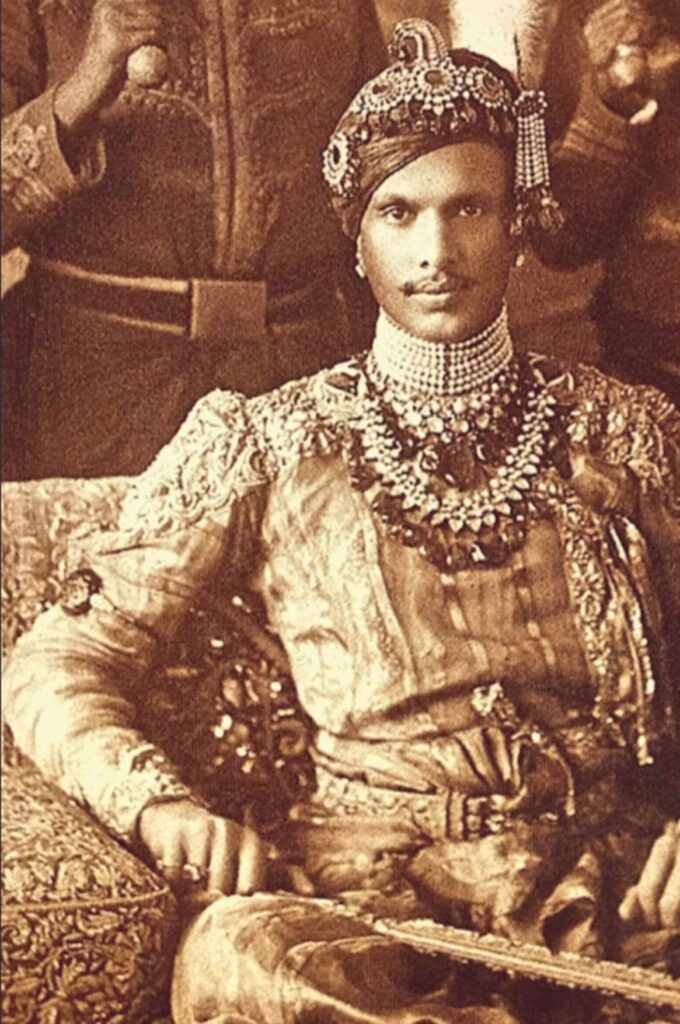
Maharaja Sawai Jai Singh Prabhakar was one of the most notable rulers of the princely state of Alwar. His reign was marked by significant political, military, and cultural developments. As the last ruling Maharaja of Alwar before India’s independence, he played a crucial role in shaping the region’s destiny. Moreover, his leadership, administrative reforms, and contributions to arts and culture made him a legendary figure in Rajasthan’s history.
Early Life and Ascension to the Throne
Born into the illustrious Naruka Rajput clan, Maharaja Sawai Jai Singh Prabhakar inherited the throne of Alwar at a crucial time in the 20th century. His lineage traced back to the warrior traditions of Rajputana, which instilled in him a strong sense of duty, valor, and governance. From an early age, he was trained in statecraft, military strategies, and diplomatic affairs. As a result, these skills would later help him navigate the complexities of princely rule under British colonial rule.
Administration and Governance
Maharaja Sawai Jai Singh Prabhakar was known for his visionary approach to administration. He implemented various reforms to modernize Alwar’s infrastructure, economy, and judicial systems. Some of his key contributions included:
- Infrastructure Development: He encouraged the construction of roads, bridges, and public buildings to enhance connectivity and trade. Consequently, this improved economic activities in the region.
- Education and Social Reforms: He introduced educational initiatives to promote literacy among the people of Alwar. Additionally, schools and institutions were established to provide better learning opportunities.
- Judicial and Legal Reforms: The Maharaja worked towards improving the legal framework of the state. Therefore, justice became fairer and more efficient.
- Economic Policies: He supported local industries and encouraged trade, which significantly boosted the economic prosperity of Alwar.
Military Strength and Alliances
As a ruler deeply concerned about the security of his state, Maharaja Sawai Jai Singh Prabhakar maintained a well-equipped army. He strengthened Alwar’s military forces by modernizing weapons and improving strategic defenses.
His military acumen earned him respect among the princely states. Furthermore, he actively sought alliances with other Rajput rulers to maintain regional stability. However, like many other princely states, Alwar eventually came under the indirect control of the British, which limited the extent of his military actions.
Cultural Patronage and Contributions
Maharaja Sawai Jai Singh Prabhakar was a great patron of arts and culture. Under his rule:
- Architectural Developments: He commissioned several palaces, forts, and temples that showcased the rich Rajput and Mughal architectural styles. Consequently, these structures continue to stand as historical marvels today.
- Promotion of Arts and Music: His court became a center for poets, musicians, and artists. As a result, cultural exchange and creativity flourished under his patronage.
- Preservation of Heritage: He took significant steps in preserving historical sites and promoting Rajasthan’s traditional crafts and customs. Thus, his efforts ensured the continuation of Alwar’s rich heritage.
Relationship with the British Raj
Like many other princely rulers of his time, Maharaja Sawai Jai Singh Prabhakar had to maintain diplomatic relations with the British colonial administration. While he managed to uphold the dignity and autonomy of Alwar to some extent, the growing influence of British policies often created challenges in governance.
His interactions with the British varied between cooperation and resistance. Nevertheless, he sought to protect Alwar’s interests while navigating the complexities of colonial rule. His ability to balance these dynamics showcased his astute leadership.
The Final Years and Legacy
As India moved towards independence, Maharaja Sawai Jai Singh Prabhakar faced significant political upheaval. The integration of princely states into the Indian Union marked the end of his reign as a sovereign ruler. Despite this transition, his legacy continued to inspire future generations.
His contributions to governance, military strategy, and cultural development remain an integral part of Alwar’s history. Today, Alwar continues to be recognized for its architectural marvels, rich heritage, and historical significance. Much of this can be attributed to his rule.
Conclusion
Maharaja Sawai Jai Singh Prabhakar of Alwar was a remarkable leader whose vision and efforts left a lasting impact on Rajasthan’s history. His reign was characterized by administrative efficiency, military prowess, cultural enrichment, and resilience against colonial challenges. As we look back at his contributions, his name stands as a symbol of Rajput valor and governance in the annals of Indian history.
Leave a Reply