Introduction
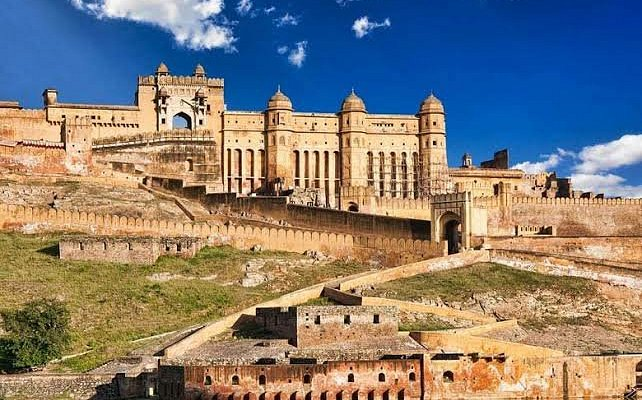
Located about 11 kilometres from Jaipur, Amber Palace (Amer Fort) is one of Rajasthan’s most beautiful historical landmarks. Surrounded by the Aravalli Hills and overlooking the peaceful Maota Lake, the palace reflects the royal lifestyle, artistic excellence and architectural brilliance of Rajasthan’s former ruler.
A Glimpse into History
The history of Amber Palace dates back to the late 16th century. Its construction was started by Raja Man Singh I around 1592, one of the most important rulers of the Kachwaha Rajput dynasty. Later, the palace was expanded and developed by successive rulers, particularly Raja Jai Singh I.
Before Jaipur became the capital of the Kachwaha rulers in the 18th century, Amber served as their principal seat of power. The palace was not simply a royal residence; it was also an important centre for administration, defence and royal ceremonies.
Over the years, Mughal influences became visible in its architecture, reflecting the political and cultural connections between the Rajput rulers and the Mughal Empire.
Architectural Beauty: Where Rajput and Mughal Styles Meet
The architecture of Amber Palace is a beautiful blend of Rajput and Mughal styles. Rajput elements can be seen in its massive gateways, courtyards, domes and traditional decorative patterns, while Mughal influences appear in its elegant arches, gardens and detailed ornamental designs.
Built primarily with red sandstone and marble, the palace has a grand appearance that beautifully complements the surrounding hills.
Its different sections were designed for specific royal activities, including public gatherings, private meetings, entertainment and residential purposes.
Architectural Marvel
Amber Palace exemplifies a perfect blend of Hindu and Mughal architectural styles. Built using red sandstone and white marble, the fort’s artistic elegance is evident in its:
- Ganesh Pol: The grand entrance gate adorned with vibrant frescoes and latticed windows.
- Diwan-i-Aam (Hall of Public Audience): A massive hall featuring carved pillars and an elevated throne.
- Diwan-i-Khas (Hall of Private Audience): Known for its intricate marble paneling and floral motifs.
- Sheesh Mahal (Mirror Palace): A dazzling chamber decorated with thousands of tiny mirrors that reflect even a single candle’s light, illuminating the entire room.
- Sukh Niwas: A cooling retreat with a unique water channel system that acted as an early form of air conditioning.
A Royal Experience Worth Remembering
Amber Palace is much more than an impressive historical monument. It is a reflection of Rajasthan’s royal heritage, architectural creativity and cultural traditions. From the beautiful mirror work of Sheesh Mahal to the colourful entrance of Ganesh Pol, every section offers something unique to discover.
Whether you are interested in history, architecture, photography or simply exploring Rajasthan’s royal past, Amber Palace deserves a place on your Jaipur travel itinerary. Its grand courtyards, peaceful surroundings and fascinating stories make it an experience that stays with visitors long after they leave.
Cultural and Historical Importance
Amber Palace is not just a historic fort but also a cultural hub. It hosts several festivals and events that showcase Rajasthan’s vibrant traditions. The palace is a prominent venue for:
- Light and Sound Show: An enchanting narration of Amber Fort’s history through stunning visuals and dramatic storytelling.
- Teej Festival: Celebrated with great enthusiasm, this festival brings the fort to life with processions, folk music, and dance performances.
- Elephant Rides: A traditional way to ascend the fort, providing a glimpse into the royal lifestyle of the Rajput kings.
Tips for Visitors
- Wear comfortable shoes as the palace requires a lot of walking.
- Hire a local guide for a deeper understanding of the fort’s history and architecture.
- Capture breathtaking views of the palace and surrounding hills from the fort’s higher points.
- Visit during early hours to avoid heavy tourist crowds.
Conclusion
Amber Palace stands as a magnificent symbol of Rajasthan’s royal heritage, offering an unforgettable journey through history, art, and culture. Its breathtaking architecture, rich history, and cultural significance make it a must-visit destination for history enthusiasts and travelers alike. Whether you’re admiring the intricate mirror work of Sheesh Mahal or witnessing a stunning sunset over the Aravalli Hills, Amber Palace promises an experience that transcends time and leaves visitors in awe of its grandeur.