

Rising dramatically from the Arabian Sea off the Konkan coast of Maharashtra, Murud–Janjira stands as one of India’s most formidable and unconquered maritime fortresses. More than a military structure, Janjira is a symbol of naval brilliance, political resilience, and the enduring legacy of the Nawabs of Janjira, who ruled an independent coastal state for over three centuries.
Murud–Janjira: The Island Fortress
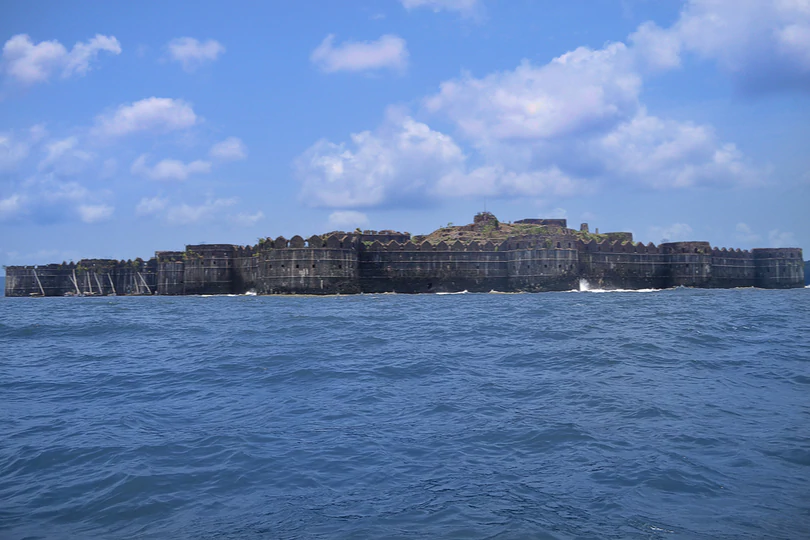
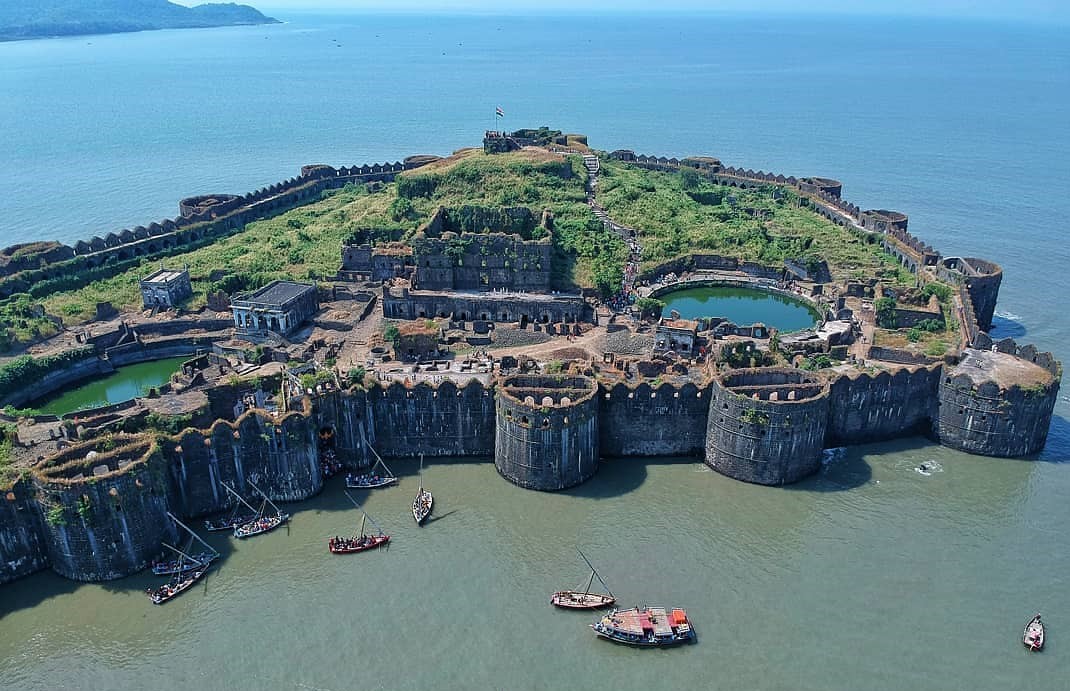
Murud–Janjira Fort is located near the coastal town of Murud in present-day Raigad district. Built on an oval island approximately a mile from the shore, the fort appears impenetrable from the sea, its massive stone walls rising directly out of the water. With 19 bastions, hidden gates, freshwater reservoirs, and advanced defensive architecture, Janjira was considered one of the strongest naval forts in India.
What sets Murud–Janjira apart is its unique distinction—it was never conquered, despite repeated attempts by powerful forces including the Marathas, the Portuguese, the British, and the Siddis’ rivals along the western coast.
Origins of the Siddis and Janjira
The rulers of Janjira were the Siddis, a community of African origin who rose to prominence in India as naval commanders and administrators. Initially serving under regional powers, the Siddis gradually established their own autonomous state at Janjira.
The name Janjira is believed to be derived from the Arabic word “Jazira”, meaning island, reflecting its strategic maritime location. Over time, Janjira became the seat of a powerful naval state controlling key sea routes along the Konkan coast.
The Nawabs of Janjira
The rulers of Janjira adopted the title Nawab, and the state became known as the Nawabate of Janjira. The Nawabs were renowned for their naval strength, diplomatic acumen, and administrative efficiency. Though Muslim rulers, they governed a largely Hindu population and maintained relative harmony, supporting local traditions, temples, and coastal trade communities.
Among the most notable rulers was Nawab Siddi Jauhar, under whose leadership Janjira reached the height of its naval power. The Nawabs maintained a strong fleet that rivaled European powers in the Indian Ocean and often checked the expansion of the Marathas at sea.
Rivalry with the Marathas
One of the most defining chapters in Janjira’s history was its prolonged rivalry with the Maratha Empire. Chhatrapati Shivaji Maharaj and later the Peshwas made multiple attempts to capture Janjira, recognizing its strategic importance. Despite clever sieges, naval blockades, and even the construction of nearby forts such as Padmadurg, Janjira remained unconquered.
This resistance elevated the Nawabs of Janjira to legendary status in Indian military history.
Murud and the Royal Legacy
While Janjira served as the naval stronghold, Murud became the mainland administrative center and royal residence of the Nawabs. The Nawabs built palaces, mosques, and civic structures in Murud, many of which still stand as reminders of their refined court culture and patronage of art and architecture.
Even after India’s independence and the merger of princely states, the Nawabs of Janjira retained social respect and cultural influence. The royal family continues to be associated with heritage conservation and the historical identity of the region.
Architectural and Engineering Marvel
Murud–Janjira’s engineering was far ahead of its time. The fort contained freshwater lakes despite being surrounded by saltwater, concealed entrances accessible only at specific tides, and cannons—some cast from a rare five-metal alloy. The most famous of these cannons, Kalal Bangdi, is legendary for its size and power.
Enduring Symbol of Maritime Power
Today, Murud–Janjira stands as a monument to India’s rich maritime history and the indomitable spirit of its defenders. The legacy of the Nawabs of Janjira represents a unique chapter where African-origin rulers became integral to India’s coastal history, blending global influences with local traditions.
Unconquered, unyielding, and unforgettable, Murud–Janjira remains a timeless symbol of strategic genius and royal resilience on India’s western shore.
