India Royal Families India Royal Families
  • Home
  • About IRF
  • Coat Of Arms
  • Heritage
    • Royal Families of India
    • Royal History and Legacy
  • Art and Culture
    • Royal partons of Art
    • Royal Recipes
    • Cultural Heritage of India
  • Travel and Experience
    • Tour and Travel
    • Hotels & Resorts
    • Events and Festivals
  • Royal Profiles
    • Featured Royal Families
    • Royal Hoteliers
    • Famous Rajput Personalities
    • Royals Interviewed
  • More
    • Videos
    • Advertise With Us
Stay Connected with Royal Heritage
Loading
Social Links
Facebook 0 Likes
Instagram 0 Followers
Twitter 0 Followers
  • Facebook
  • Instagram
  • Twitter
0 Likes
0 Followers
0 Followers
India Royal Families India Royal Families
India Royal Families
  • Home
  • About IRF
  • Coat Of Arms
  • Heritage
    • Royal Families of India
    • Royal History and Legacy
  • Art and Culture
    • Royal partons of Art
    • Royal Recipes
    • Cultural Heritage of India
  • Travel and Experience
    • Tour and Travel
    • Hotels & Resorts
    • Events and Festivals
  • Royal Profiles
    • Featured Royal Families
    • Royal Hoteliers
    • Famous Rajput Personalities
    • Royals Interviewed
  • More
    • Videos
    • Advertise With Us
  • Uncategorized

The Ahom Kingdom: The 600-Year Reign of Assam’s Glorious Past

  • January 30, 2025
  • admin
Total
0
Shares
0
0
0
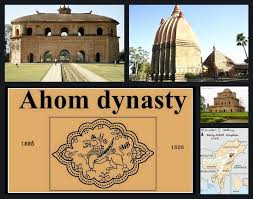
Ahom dynasty
The Ahom Kingdom: The 600-Year Reign That Shaped Assam’s Glorious Past

The Ahom Kingdom: The Legacy of Assam’s Mighty Rulers

The Ahom Kingdom (1228–1826) was one of the longest-reigning dynasties in India, ruling Assam for nearly 600 years. Established by Sukaphaa, a Tai prince from present-day Yunnan, China, the Ahoms significantly shaped the region’s history, culture, and administration.

Rise and Expansion of the Ahom Kingdom

Sukaphaa founded the kingdom in 1228 after crossing the Patkai Hills into the Brahmaputra Valley. Over time, the Ahoms expanded their territory, integrating various indigenous tribes through diplomacy and warfare. They successfully resisted the Mughal invasions multiple times, particularly under the leadership of Lachit Borphukan, whose heroic defense in the Battle of Saraighat (1671) remains legendary.

Administration and Military Strength

The Ahoms introduced a well-organized administrative system. Their unique Paik system classified citizens into different labor categories, ensuring a self-sufficient economy. The Ahom army, equipped with superior warfare strategies and advanced weaponry, played a crucial role in safeguarding their kingdom.

Cultural and Architectural Contributions

The Ahom rulers patronized art, literature, and architecture. Temples like the Sivadol and monuments such as Kareng Ghar and Talatal Ghar showcase their architectural brilliance. They also contributed to the development of the Assamese language and historical chronicles called Buranjis.

Decline and Legacy

The Ahom Kingdom began to decline in the late 18th century due to internal conflicts and Burmese invasions. Eventually, in 1826, the British took control after the Treaty of Yandabo. However, the legacy of the Ahoms continues to be celebrated in Assam through festivals, folklore, and historical commemorations.

Conclusion

The Ahom Kingdom’s impact on Assam is profound, shaping its cultural identity and historical resilience. Their strategic governance, military brilliance, and cultural advancements continue to inspire generations.

Total
0
Shares
Share 0
Tweet 0
Pin it 0
Related Topics
  • 600-year reign
  • Ahom architecture
  • Ahom dynasty
  • Ahom Kingdom
  • ancient warfare
  • Assam history
  • Assam’s golden era
  • Brahmaputra Valley
  • Buranjis
  • Cultural Heritage
  • Heritage Tourism
  • historical Assam
  • historical rulers
  • Indian history
  • Indian Kingdoms
  • indigenous traditions
  • Medieval India
  • military strategy
  • Monarchy
  • Mughal conflicts
  • Northeast India
  • Southeast Asian influence
  • Tai-Ahom
admin

Previous Article
  • History

Maharaja Ranjit Singh – The fearless warrior

  • January 30, 2025
  • admin
View Post
Next Article
  • Uncategorized

Ayodhya Ram Mandir: Then vs. Now – A Journey Through Time

  • January 30, 2025
  • admin
View Post
You May Also Like
View Post
  • Uncategorized

A Night to Remember: Mayo College Agra Chapter Gathers by the Yamuna

  • admin
  • January 29, 2026
View Post
  • Uncategorized

End of an Era: Maharani Kamasundari Devi of Darbhanga Passes Away

  • admin
  • January 29, 2026
View Post
  • Uncategorized

Nachana Haveli: A Jewel of Jaisalmer’s Royal Heritage

  • admin
  • December 30, 2025
View Post
  • Uncategorized

Pratap Mehta: A Modern Voice of Leadership, Legacy, and Inner Discipline

  • admin
  • December 30, 2025
View Post
  • Uncategorized

🛕 NARSINGHGARH ROYAL FAMILY — A LEGACY OF VALOR AND SERVICE

  • admin
  • December 30, 2025
View Post
  • Uncategorized

Preserving Royal Legacy & India’s Automotive Heritage

  • admin
  • December 30, 2025
View Post
  • Uncategorized

The Rampura Royal Family of Uttar Pradesh and Fort Rampura: Heritage, History & Hospitality

  • admin
  • December 30, 2025
View Post
  • Uncategorized

Murud–Janjira and the Nawabs of Janjira: The Invincible Sea Fortress of India

  • admin
  • December 30, 2025

Leave a Reply Cancel reply

Your email address will not be published. Required fields are marked *

Hey, there :)

Are you planning to visit a heritage site or experience a royal stay at a palace?
We’d love to help you plan a memorable journey.
Simply drop us a message by filling out this form.

About
India Royal Families
  • Facebook
  • Instagram
  • Twitter
©2025- India Royal Families. Designed By Awaraj

Input your search keywords and press Enter.