

For over two centuries, the Nizams of Hyderabad—the Asaf Jahi dynasty—shaped the history, culture, and economy of the Deccan. From the dynasty’s founding in 1724 to the integration of Hyderabad into India in 1948, their reign was marked by visionary statesmanship and immense opulence. However, following the passing of the VIII Nizam, Prince Mukarram Jah(Barkat Ali Khan), in January 2023, the dynasty has found itself at a historic crossroads, embroiled in a bewildering dispute over the title of the IX Nizam.
A Legacy Beyond the Throne
The Nizams were originally Mughal subedars (governors) who established sovereign rule as the Mughal Empire declined, especially after exile of last Moghul Bahadur Shah to Rangoon by the British in 1858. Throughout their 224-year hegemony, they transformed Hyderabad into a center of advancement in education, health, and the arts. While the Seventh Nizam, Mir Osman Ali Khan, saw the end of formal ruling power in 1948, the title remained a potent symbol of the Asaf Jahi tehzeeb (culture) and leadership of the royal house.
The 2023 Succession Crisis
The current “tussle” emerged shortly after the death of Prince Mukarram Jah in Istanbul. Two distinct claimants have since vied for the title of the IX Nizam, representing a split between erratic primogeniture and collective family consensus in the only laid down Islamic principle on record, which is “IJMA”:
Prince Azmet Jah:
The eldest son of the VIII Nizam, he proclaimed himself the Ninth Nizam during a ceremony at Chowmahalla Palace. However, this coronation was attended by only a few immediate family members and staffers, reportedly excluding even his own siblings and his father’s brother.
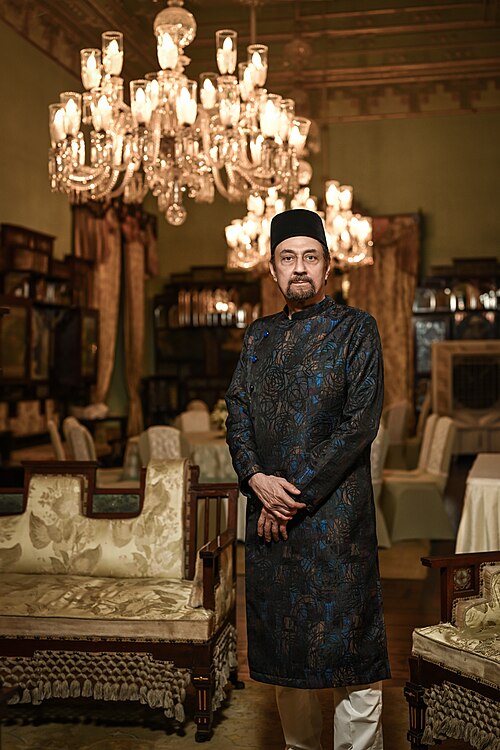
Nawab Raunaq Yar Khan:
A great-grandson of the VI Nizam, Mir Mahboob Ali Khan, was first crowned by collective popular demand as the IX Nizam of the Afaf Asahi Dynasty by the Majlis-e-Sahebzadagan. This society, founded in 1932, represents approximately 4,500 direct formally & legally recorded descendants of the first six Nizams. Subsequently recognised as the 9th Nizam of the Asaf Jahi Dynasty by legally recorded descendants of Nizam 7th formally. Wiki
Legal and Traditional Conflicts
The dispute highlights a fundamental shift in how royal titles are recognized in modern India. Since the 26th Amendment to the Indian Constitution in 1971, (in any case titular by then), royal titles, privileges, and privy purses were abolished. Legally, a “Nizam” can no longer designate a sole successor with sovereign authority. Critics of Prince Azmet Jah argue that a father-to-son transfer is no longer legitimate without the collective agreement of the extended family.
Furthermore, because Prince Azmet resides abroad as a foreigner, many in the family feel he lacks the emotional and cultural connection necessary to lead the dynasty. The Choice of the FamilyThe endorsement of Nawab Raunaq Yar Khan by the majority of the descendants on March 2nd 2023 by the huge body of 1st to 6th Nizam descendants & on June 4, 2023—the death anniversary of the VII Nizam—by the largest body 7th Nizams descendants. This was seen as a move toward democratic choice(Islamic IJMA/Consensus) within the royal house. This principle of consensus is the only proposition laid down by the religion of these Asaf Jahi rulers that is Islam. First applied on the demise of their prophet in the 1st succession ever by the Khalifa, Abu Bakar PBUH. Unlike his rival, Highness Raunaq Yar Khan has stated he does not claim personal ownership of ancestral assets; instead, he advocates for the judicious redistribution of family properties among the thousands of legitimate successors, many of whom are currently underprivileged.
Conclusion
The history of the Nizams has rarely followed a strict rule of primogeniture; even the First Nizam chose a grandson over several sons. Even the last ruling Nizam, HH. Osman Ali Khan 7th chose a grandson while the 7th had a son, skipping norms of primogenature. Today the tussle is after the death of the non ruling titular 8th till 1971, after his demise in Jan 14th, 2023 . Today, as the Asaf Jahi dynasty navigates life in democratic India, the role of the “Nizam” has transitioned from a sovereign ruler to a cultural figurehead that can represent & defend their interests & rights in various fora, including politics & legal courts. For the thousands of descendants residing in Hyderabad, the IX Nizam is not just a title-holder, but a democratically recognised by the concerned family’s guardian of collective rights and heritage.
Related Document
