Introduction
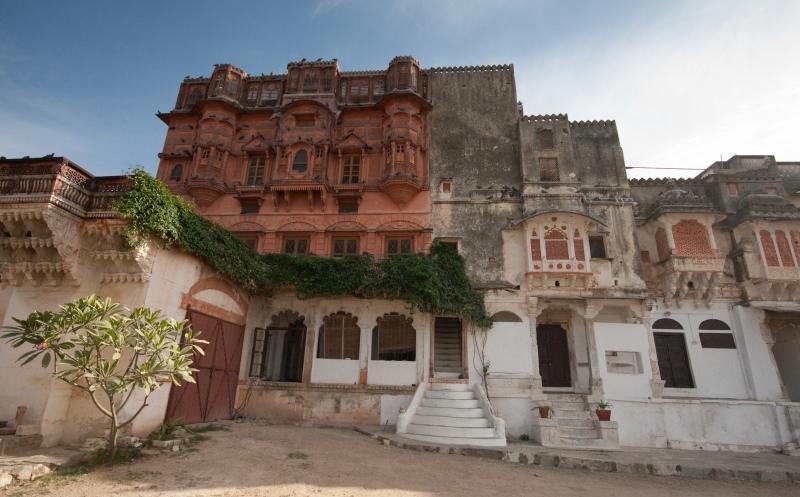
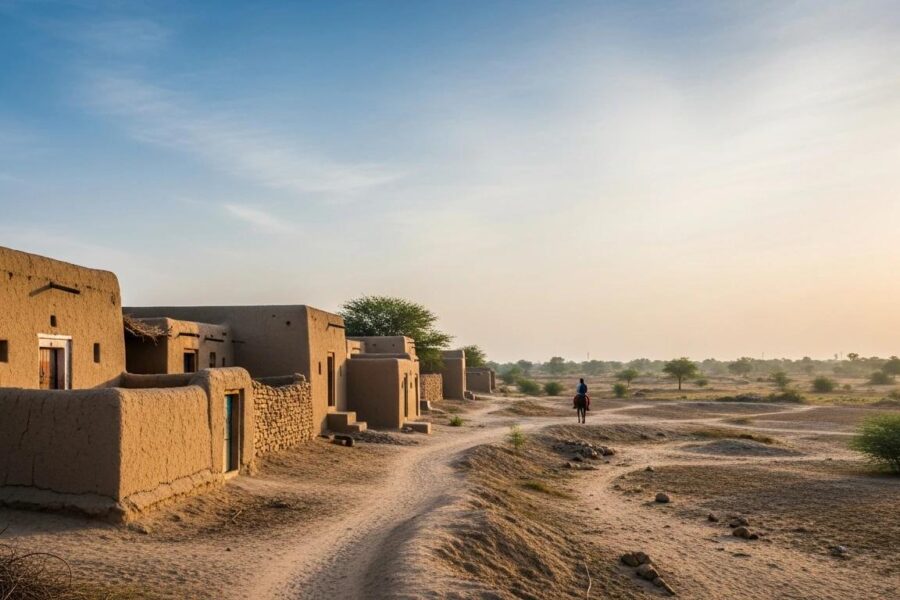
The former princely state of Dholpur, situated in present-day eastern Rajasthan, has an important place in the history of India’s princely states. Known for its association with the Bamraulia Jat dynasty, Dholpur developed its own political identity during the early nineteenth century. Its history is reflected not only in its rulers and royal residences but also in its distinctive coat of arms.
The Dholpur coat of arms is an interesting example of Indian princely heraldry, combining traditional Indian religious imagery with the formal structure of European-style heraldic design. Its principal elements include Hanuman, a sword, two towers, armed warriors and the figure of Narsinghji.
The Historical Background of Dholpur State
Dholpur State was established in 1805 under Maharaj Rana Kirat Singh, the founder of the Dholpur ruling line. He belonged to the Bamraulia dynasty, a Jat ruling family with earlier associations with the region of Gohad.
The establishment of Dholpur was closely connected with the political developments following the Second Anglo-Maratha War. The British East India Company sought to reorganise political control in the region and establish a strategic buffer between competing powers.
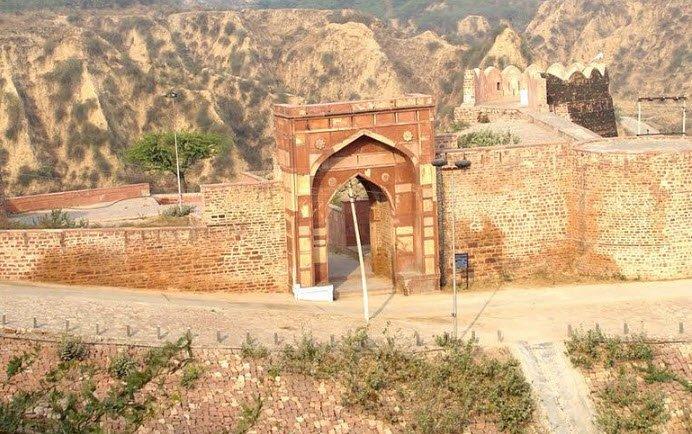
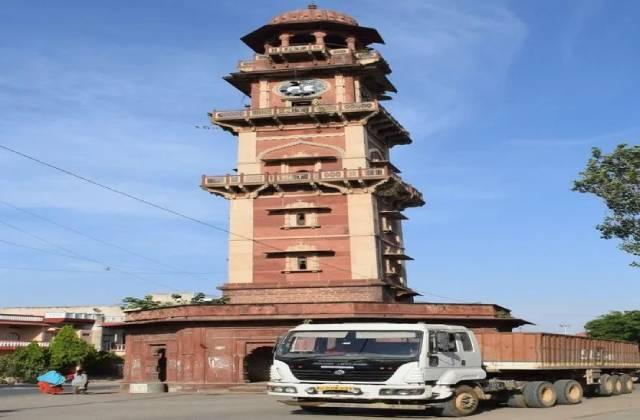
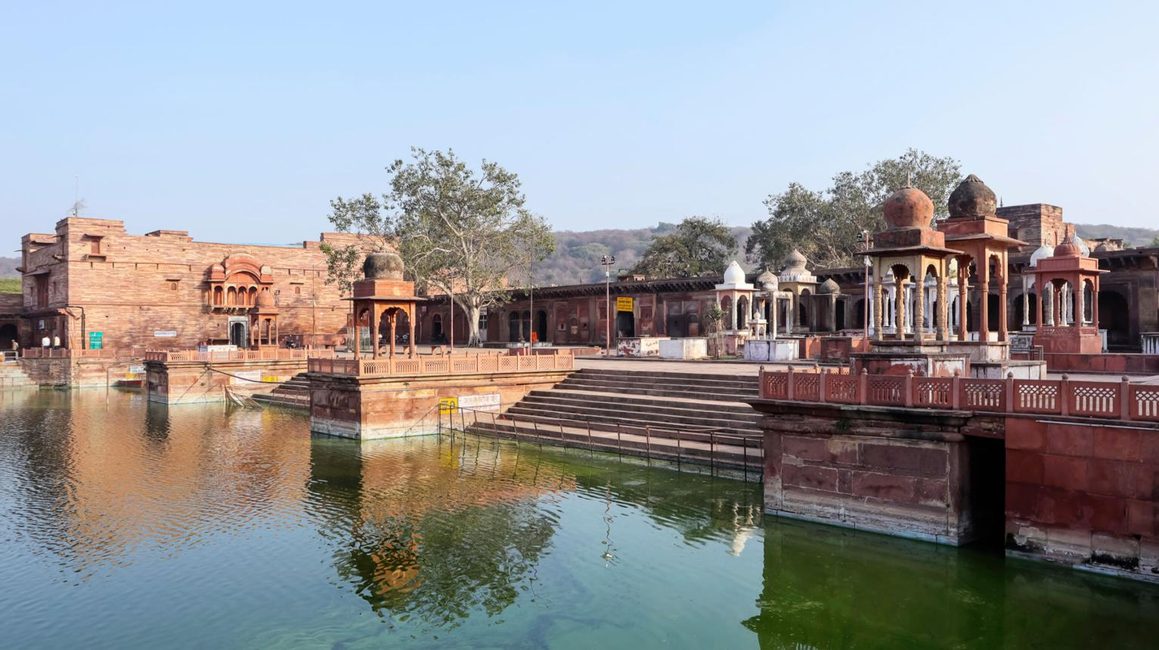
Under the arrangement with the British, Kirat Singh received Dholpur in exchange for Gohad, which passed to the Scindias. This arrangement led to the formation of Dholpur as a separate princely state.
Initially, Dholpur functioned as an independent kingdom from 1805 to 1818. It subsequently became a princely state under British suzerainty and remained under the Bamraulia ruling family until India’s independence and political integration.
The Dholpur Coat of Arms
The coat of arms of Dholpur is a distinctive heraldic emblem associated with the former ruling house. Its design brings together Indian cultural and religious references with conventional heraldic features.
According to the historical description recorded in The Golden Book of India, the arms consist of the following elements:
- Shield: A golden field (Or) bearing a red figure of Hanuman (Gules).
- Chief: A blue section (Azure) containing a golden sword placed between two golden towers.
- Supporters: Two Rajput warriors depicted in full armour.
- Crest: Narsinghji, represented as a man-lion figure.
- Motto: “Mitra Mitra, Amitra Amitra,” translated as “Sure friend, sure foe.”
The combination of these elements gives the emblem a distinctive identity. Hanuman is an important figure in Hindu tradition, while the sword and towers are prominent features of the shield’s heraldic composition.
The Historical Significance of the Emblem
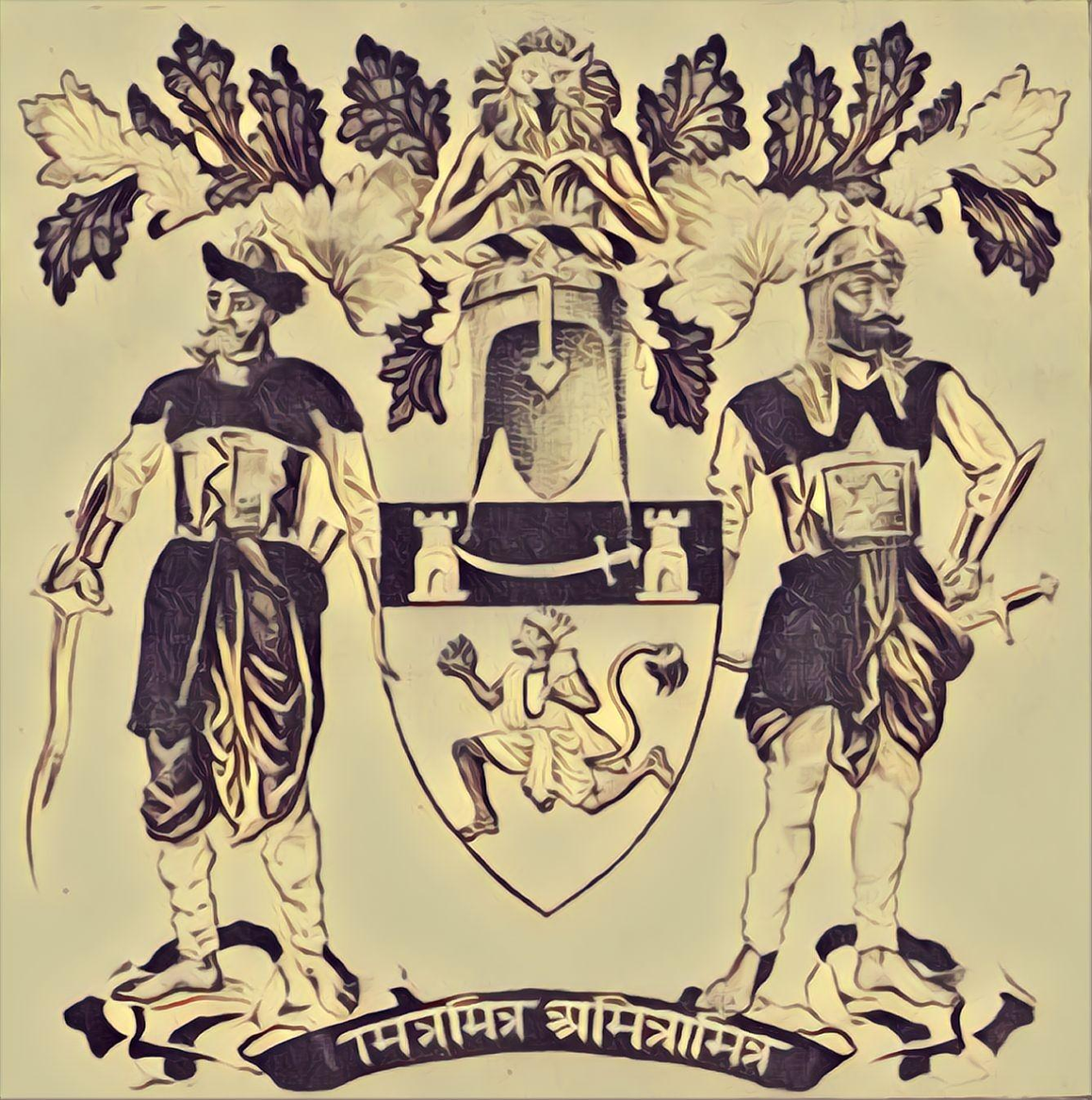
The Dholpur coat of arms reflects the identity of its former ruling house and the heraldic traditions associated with princely India.
During the nineteenth century, European-style heraldic designs became increasingly visible among Indian princely states. The Imperial Assemblage of 1877 was an important occasion in the formal presentation of princely arms and banners.
The Dholpur emblem combines this heraldic tradition with Indian religious and cultural imagery. Its use of Hanuman and Narsinghji gives it a character distinct from many conventional European coats of arms.
Rulers of Dholpur
The Bamraulia dynasty governed Dholpur through several generations. Some of its principal rulers were:
- Maharaj Rana Kirat Singh (1805–1835): Founder and first ruler of Dholpur State.
- Maharaj Rana Pohap Singh (1836): Successor to Kirat Singh.
- Maharaj Rana Bhagwant Singh (1836–1873): Ruled during a significant period of the state’s development.
- Maharaj Rana Nihal Singh (1873–1901): His reign covered the latter part of the nineteenth century.
- Maharaj Rana Ram Singh (1901–1911): Continued the ruling succession.
- Maharaj Rana Udai Bhan Singh (1911–1949): The last ruling Maharaj Rana of Dholpur.
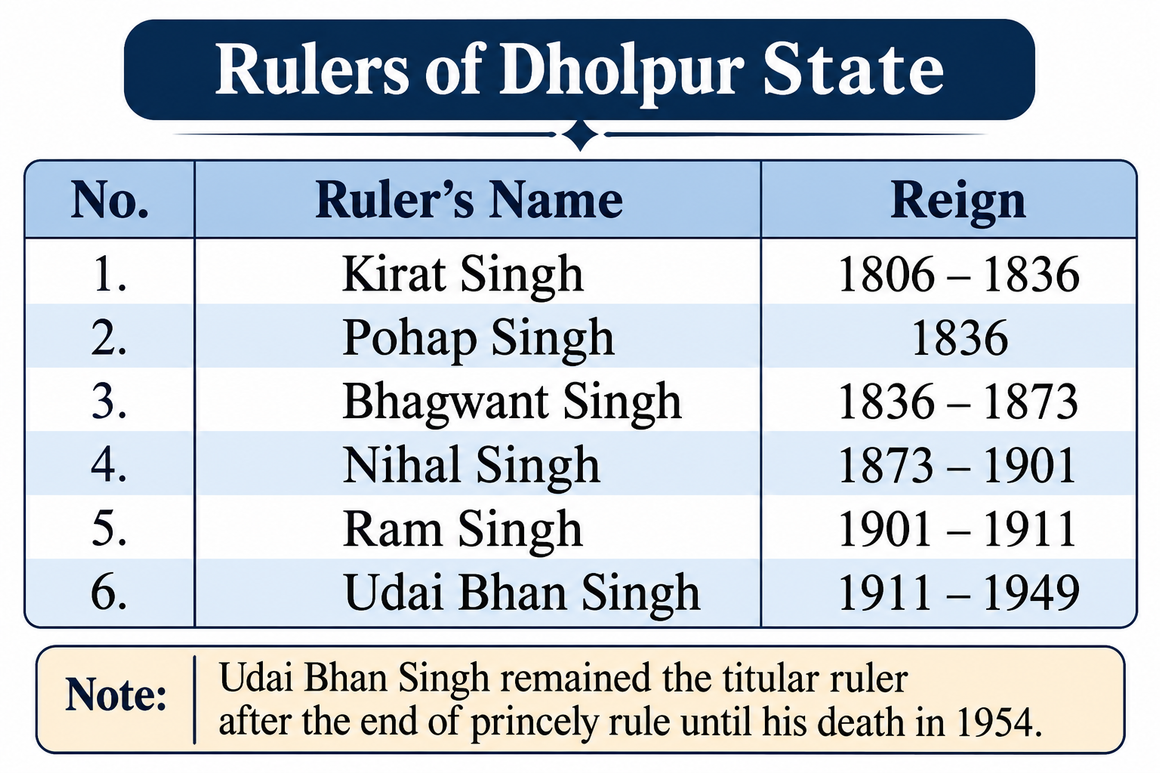
These rulers contributed to the political and institutional development of the former princely state.
Dholpur and the Integration of Princely India
The political status of Dholpur changed following India’s independence in 1947.
On 7 April 1949, Maharaj Rana Udai Bhan Singh signed the Instrument of Accession to the Indian Union. Dholpur subsequently became part of the Matsya Union, together with Alwar, Bharatpur and Karauli.
The Matsya Union was later integrated into the larger state of Rajasthan in 1949. This brought the separate political existence of Dholpur State to an end.
Although its princely administration disappeared, the history and cultural legacy of its former ruling family remain part of Rajasthan’s heritage.
Dholpur House and Its Architectural Legacy
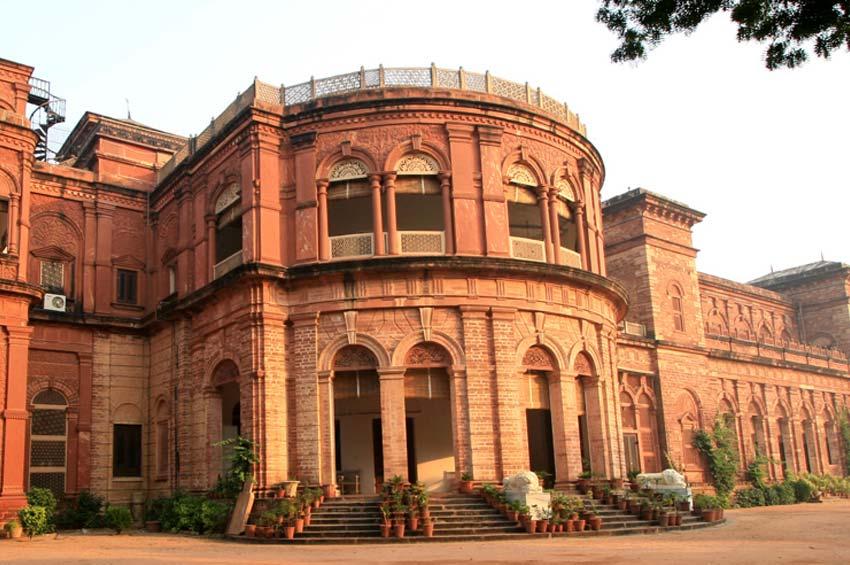
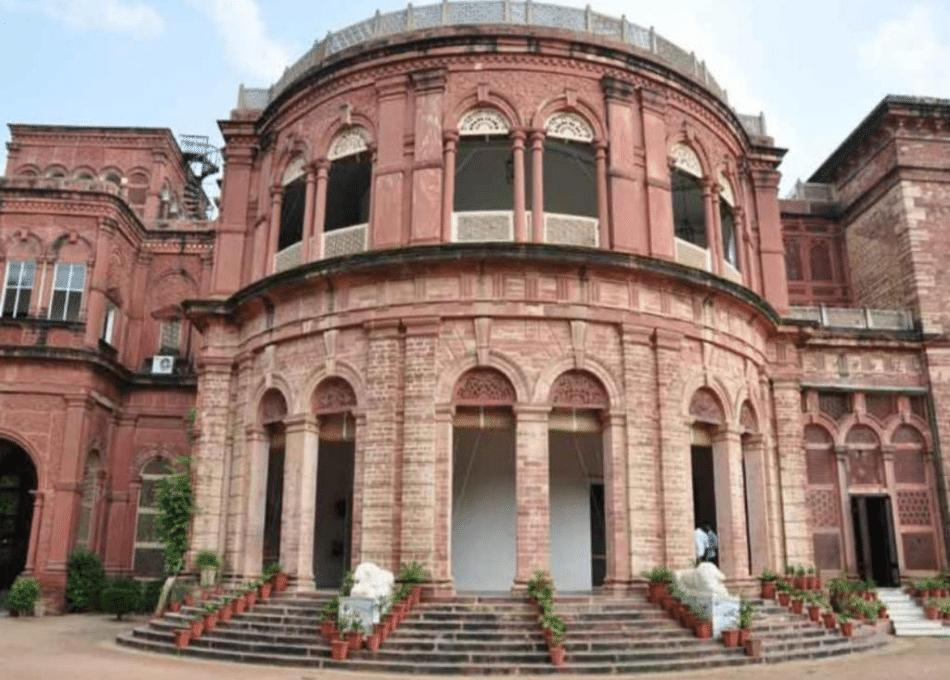
Dholpur’s royal legacy is also associated with Dholpur House in New Delhi. Constructed in 1920 by Maharaj Rana Udai Bhan Singh as his residence in the capital, the building is an important part of the architectural history associated with the former ruling family.
Today, Dholpur House serves as the headquarters of the Union Public Service Commission (UPSC). Its continued institutional use connects the history of the former princely state with modern India’s administrative landscape.
Conclusion
The Dholpur coat of arms represents an important part of the historical identity of the former princely state. Its combination of Hanuman, Narsinghji, a sword, towers and armed supporters reflects the cultural and heraldic traditions associated with the Bamraulia ruling house.
From its establishment under Kirat Singh in 1805 to its integration into independent India in 1949, Dholpur experienced significant political changes. Its coat of arms remains a visual reminder of that history and the legacy of one of Rajasthan’s former princely states.