
Exquisite Marble Jali Screens & Inlay Work: Taj Mahal
Introduction
The Taj Mahal, an epitome of love and architectural brilliance, stands as one of the finest examples of Mughal craftsmanship. Among its many artistic elements, the intricate marble Jali screens and exquisite inlay work play a pivotal role in enhancing its aesthetic grandeur. These delicate carvings and ornamental designs not only serve an artistic function but also hold deep symbolic and structural significance. Therefore, this article delves into the magnificence of these architectural wonders and their contribution to the unparalleled beauty of the Taj Mahal.
Marble Jali Screens: The Art of Intricate Carvings
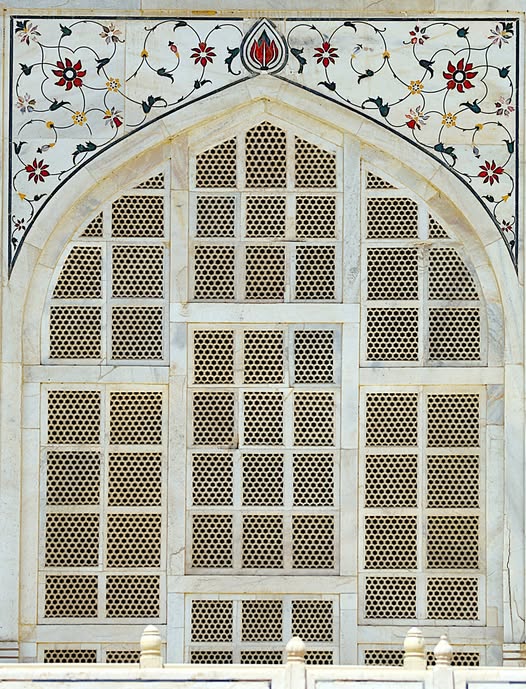
One of the most remarkable features of the Taj Mahal is its finely carved marble Jali screens (perforated stone latticework), particularly those that surround the cenotaphs of Mumtaz Mahal and Shah Jahan in the central chamber. These screens exhibit a mesmerizing fusion of geometry, floral motifs, and calligraphy, thereby embodying the pinnacle of Mughal artistry.
Purpose & Significance
- Symbolism – Jali screens represent the Islamic concept of paradise, allowing filtered light to create an ethereal glow within the mausoleum.
- Functionality – These delicate screens provide ventilation, thereby maintaining a cool and serene atmosphere inside the monument.
- Aesthetic Appeal – The seamless marble filigree work enhances the visual depth of the interiors, thus creating a divine and tranquil ambiance.
Technique of Crafting Jali Screens
The Jali carving technique involved an extraordinary level of skill and precision. The process included:
- Selection of Marble – White Makrana marble, known for its durability and luminescence, was carefully chosen.
- Hand-Carved Precision – Skilled artisans meticulously chiseled and sculpted the marble to achieve flawless lattice patterns.
- Geometric & Floral Patterns – The intricate designs were inspired by Persian and Islamic artistic traditions, ensuring that each Jali was unique.
Inlay Work: The Pietra Dura Marvel of the Taj Mahal
Another breathtaking feature of the Taj Mahal is its elaborate Pietra Dura inlay work, a technique known as Parchin Kari in Mughal architecture. This involves embedding precious and semi-precious stones into white marble to create vibrant, floral, and arabesque patterns. Consequently, this technique enhances the monument’s elegance and visual appeal.
Materials Used in the Inlay Work
The inlay work of the Taj Mahal includes an array of precious stones, sourced from different parts of the world. For instance:
- Lapis Lazuli (Afghanistan) – Deep blue hues symbolize the vastness of the sky.
- Jasper (Punjab) – A rich red stone used to create striking contrasts.
- Turquoise (Tibet) – Represents tranquility and the heavens.
- Onyx (Persia) – Enhances the depth of designs with its dark black shade.
- Carnelian (Arabia) – Known for its warm orange tones, adding vibrancy.
Methods of Inlay Work
The Pietra Dura technique required meticulous craftsmanship. The process included several essential steps:
- Design Sketching – Artists first sketched floral and geometric patterns on marble slabs to ensure accuracy.
- Stone Cutting – Each gemstone was precisely cut to fit the engraved design.
- Embedding Process – The stones were carefully inlaid using a fine adhesive paste to secure them in place.
- Polishing – Finally, the surface was polished to achieve a seamless and lustrous finish, making the artwork even more captivating.
Significance of Jali Screens & Inlay Work in the Taj Mahal
The fusion of Jali craftsmanship and Pietra Dura inlay work elevates the Taj Mahal beyond a mere tomb, transforming it into a poetic expression of love and devotion.
Additionally, the interplay of light through the Jali screens creates an ever-changing pattern of illumination, thereby enhancing the spiritual ambiance. The inlay work, on the other hand, adds vibrant color to the pristine white marble, making the monument a visual masterpiece.
Moreover, both techniques symbolize the perfection and grandeur of Mughal artistry, reflecting their dedication to intricate craftsmanship. Thus, the Taj Mahal remains an enduring symbol of beauty and artistic excellence.
Conclusion
The Jali screens and inlay work in the Taj Mahal stand as timeless testaments to the artistic excellence of Mughal architecture. These intricate carvings and stone inlays not only add to its aesthetic beauty but also narrate a tale of unparalleled craftsmanship. As one gazes upon the delicate latticework and vibrant inlay designs, it becomes evident that the Taj Mahal is much more than a monument—it is a masterpiece of artistry and devotion, immortalized in stone.
Ultimately, whether viewed from a historical, artistic, or architectural perspective, the Taj Mahal’s marble Jali screens and inlay work remain among the finest examples of human ingenuity and creative brilliance.
Leave a Reply