
The Rana Dynasty: A Legacy of Autocratic Rule in History of Nepal
Introduction
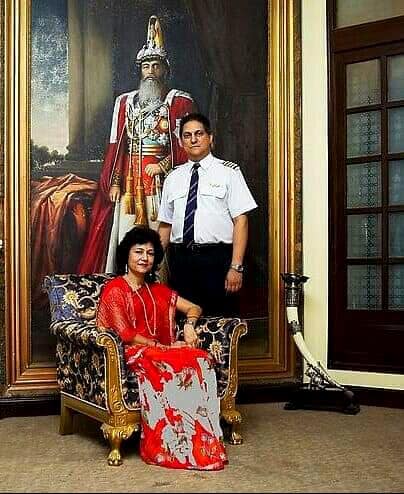
The Rana Dynasty ruled Nepal from 1846 to 1951, marking one of the most significant periods in the nation’s history. Established by Jung Bahadur Rana, the dynasty introduced a system of hereditary prime ministership, thereby sidelining the monarchy and concentrating absolute power in the hands of the Ranas. The era was characterized by autocracy, social stratification, and close ties with the British Empire. Despite their contributions to modernization, the Ranas were eventually overthrown in 1951, thus paving the way for Nepal’s democratic transition.
The Rise of the Rana Dynasty
The political instability of Nepal in the early 19th century created the perfect conditions for the rise of the Rana Dynasty. As a result, the infamous Kot Massacre of 1846, orchestrated by Jung Bahadur Rana, resulted in the elimination of several influential courtiers and the consolidation of power under the Rana rule.
Jung Bahadur Rana and the Establishment of Rana Rule
- Jung Bahadur Rana became the first Rana Prime Minister in 1846, thereby effectively controlling the governance of Nepal.
- He traveled to Britain and France in 1850, adopting Western administrative and military reforms.
- He introduced the Muluki Ain (1854), Nepal’s first legal code, which solidified caste-based laws and governance structures.
- In 1857, the Ranas aided the British during the Indian Rebellion, which significantly strengthened diplomatic ties with the British Raj.
The Rana Administration: A Period of Autocratic Rule
Under the Rana regime, Nepal functioned as an isolated, feudal society with the ruling class enjoying absolute power. Consequently, the common people suffered under their rule.
Political System
- The monarchy was reduced to a mere figurehead, while the Ranas monopolized all state affairs.
- The position of the Prime Minister became hereditary, ensuring an unbroken rule by the Rana family.
- Rigid laws and censorship suppressed opposition, which ensured prolonged Rana control.
Economic and Social Policies
- Nepal remained largely isolated from the world, and as a result, minimal industrial development took place.
- The Ranas built architectural marvels, including Singha Durbar, Rani Mahal, and Kaiser Mahal.
- Education was restricted to the elite, with schools like Durbar High School serving only Rana children and the nobility.
- Unfortunately, common citizens suffered from poverty, while the Ranas lived in luxury, accumulating immense wealth.
Foreign Relations and the British Connection
- The Ranas maintained a pro-British foreign policy, thereby aiding the British Raj in military campaigns, including World War I and II.
- As a result, Nepalese soldiers, known as Gurkhas, became an integral part of the British and Indian armies.
- The Sugauli Treaty (1815) and subsequent treaties ensured British influence over Nepalese affairs while keeping Nepal an independent state.
Downfall of the Rana Dynasty and Nepal’s Democratic Movement
Despite their firm grip on power, discontent against the Ranas grew among intellectuals, students, and the royal family. Consequently, their downfall became inevitable.
Key Factors Leading to the End of Rana Rule
- Growing Nationalism: Nepalese citizens and exiled politicians increasingly sought an end to autocratic rule.
- India’s Independence (1947): The departure of the British significantly weakened the Ranas’ external support.
- Democratic Movements: The Nepali Congress, inspired by global democratic trends, initiated armed resistance against the Ranas.
- King Tribhuvan’s Role: In 1950, King Tribhuvan sought asylum in India, thereby aligning himself with democratic forces.
The 1951 Revolution and the Fall of the Ranas
- The Delhi Agreement of 1951, brokered by India, led to a power-sharing arrangement between the Ranas, the monarchy, and democratic leaders.
- As a result, Mohan Shamsher Rana, the last Rana Prime Minister, was forced to relinquish power.
- A democratic system was introduced, thus ending 104 years of Rana rule.
Legacy of the Rana Dynasty
Although the Ranas ruled Nepal with an iron grip, their influence on Nepalese society remains evident.
Positive Contributions
- The introduction of modern architecture and infrastructure contributed to Nepal’s urban development.
- The establishment of legal codes and administrative systems provided a structured governance model.
- The development of the Gurkha regiments earned Nepalese soldiers worldwide recognition.
Negative Impact
- Suppression of democracy and lack of public education hindered Nepal’s intellectual progress.
- Widening social inequality and economic stagnation severely impacted the lower classes.
- The isolation from global progress significantly delayed Nepal’s modernization.
Conclusion
The Rana Dynasty played a crucial role in shaping Nepal’s history, leaving behind a legacy of autocracy, development, and resistance. While their rule was marked by oppression, it also laid the foundation for Nepal’s modernization. Eventually, the fall of the Ranas in 1951 ushered in a new era of democracy, thereby opening the doors to political, social, and economic reforms. Today, Nepal remembers the Ranas as both architects and obstacles of its progress, making their era a defining chapter in the nation’s past.
Leave a Reply