
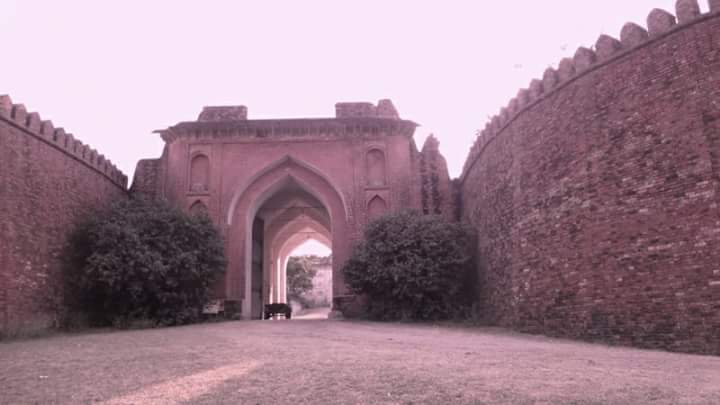
The royal house of Awagarh belongs to the history of Etah in western Uttar Pradesh. Its legacy is best explored through the relationship between a landed family, its built heritage and the educational institutions associated with Raja Balwant Singh. This approach reveals more than a list of titles or an unverified genealogy.
Where is Awagarh?
Awagarh is in Etah district, within the wider cultural landscape linking western Uttar Pradesh with Braj and eastern Rajasthan. The name appears with variant spellings in historical and modern records. Anyone researching the family should search Awagarh and Awagadh as well as the names of individual family members.
Although popular accounts use “royal house” or “state,” the legal and administrative position of an estate must be checked for the period under discussion. A hereditary title does not by itself establish that a family governed a treaty-based princely state.
The Jadaun connection
The family is associated with the Jadaun, also written Jadon or Jadoun, Rajput tradition. Royal Archives’ Awagarh entry offers a secondary genealogical outline. It is useful as a research lead, but dates, succession and adoption should ideally be checked against contemporary documents before a full family tree is presented as settled history.
Raja Balwant Singh and education in Agra
The strongest institutional thread is educational patronage. Raja Balwant Singh College’s self-study report identifies Awagarh’s Raja Balwant Singh as a major benefactor and traces the institution’s growth from school-level origins into higher education. Its story also connects agricultural teaching and research with land and facilities at Agra, Bichpuri and Awagarh.
This distinction matters: the nineteenth-century beginnings of a school should not be confused with the later establishment of a degree college. Different stages of an institution’s development can produce apparently conflicting foundation dates. The Management Technical Campus history is another institutional account to consult when following those stages.
How to read the family’s architectural legacy
A fort or residence is an archive in built form. Gateways, courtyards, water systems and later alterations may reveal how a household functioned and how its needs changed. Architectural interpretation is strongest when supported by dated photographs, plans and inscriptions. Present-day appearance alone cannot establish when every part of a complex was built.
For a visit, confirm access with the property in advance. Do not assume that a historic residence operates as a public monument, museum or hotel. A respectful exterior visit can still be worthwhile if interior access is unavailable.
What would strengthen the public record?
A carefully catalogued family archive could connect portraits with names, correspondence with dates, and endowments with the institutions that received them. Recording provenance is essential: who created the document, when, and how did it reach the present collection? Oral histories can add valuable detail when clearly identified as recollections.
Editorial disclosure: IndiaRoyalFamilies.com identifies its promoter as a member of the Awagarh family. This article therefore prioritises linked institutional evidence and distinguishes it from family-associated material.
Frequently asked questions
Why is Awagarh important to educational history?
Its association with Raja Balwant Singh and the development of the Agra institution provides a documented example of landed-family patronage extending beyond a residence.
Is there a complete verified genealogy here?
No. This overview focuses on documented connections; it does not claim to resolve every succession date or lineage tradition.
Sources and further reading
- Royal Archives’ Awagarh entry
- Raja Balwant Singh College’s self-study report
- Management Technical Campus history
Continue exploring royal heritage
- The Royal Families of Uttar Pradesh: A History of Its Princely Houses
- The History of the Jadaun Rajputs
- The Royal Contribution to Education in Colonial India
Research and reference links checked 4 November 2026. Visitor access and commercial arrangements can change; confirm with the relevant institution.
[…] The Royal House of Awagarh: History, Legacy and Contributions […]