
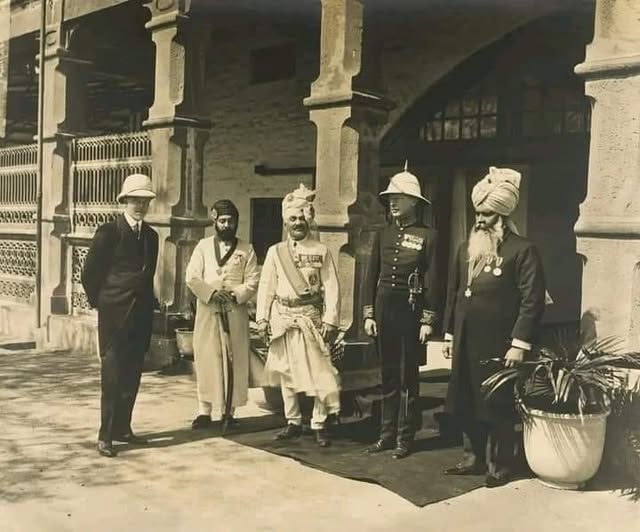
Viceroy Lord Hardinge and Maharaja Sumer Singh of Jodhpur
Introduction
During British rule in India, the relationship between Viceroy Lord Hardinge and Maharaja Sumer Singh of Jodhpur played a crucial role in shaping the political landscape of Rajasthan. Lord Hardinge, who served as the Viceroy of India from 1910 to 1916, navigated diplomatic relations with several princely states, including Jodhpur, a significant Rajput kingdom under the rule of Maharaja Sumer Singh. Their interactions had long-term implications for the governance, military contributions, and administrative reforms in Jodhpur. This article delves into their relationship and its impact on colonial India.
Maharaja Sumer Singh of Jodhpur: A Visionary Leader
Maharaja Sumer Singh (1898–1918) ascended the throne of Jodhpur at a young age. As the ruler of one of the largest princely states in British India, he was known for his progressive policies, military acumen, and loyalty to the British Crown. His reign was marked by:
- Modernization of Jodhpur: He promoted infrastructural development, including roads, railways, and education.
- Military Support to the British: He played a key role in providing Rajput warriors to the British Indian Army during World War I.
- Legal and Administrative Reforms: He initiated several policies to improve governance and law enforcement in his state.
Viceroy Lord Hardinge: Colonial Administrator and Diplomat
Charles Hardinge, 1st Baron Hardinge of Penshurst, served as Viceroy of India from 1910 to 1916. He was instrumental in:
- The Transfer of the Capital from Calcutta to Delhi: This move in 1911 solidified British control over India.
- Dealing with Political Unrest: Hardinge had to manage increasing nationalist movements, including the rise of Mahatma Gandhi.
- Strengthening Ties with Princely States: He ensured that rulers like Maharaja Sumer Singh remained aligned with British interests.
The Relationship Between Lord Hardinge and Maharaja Sumer Singh
1. Diplomatic Engagements and Support
Maharaja Sumer Singh maintained cordial relations with the British, and his interactions with Lord Hardinge were strategic and mutually beneficial. Some of the key aspects of their relationship included:
- Military Cooperation: Jodhpur’s troops, known for their bravery, were deployed in support of the British during World War I.
- Loyalty to the British Crown: Sumer Singh assured Hardinge of Jodhpur’s unwavering allegiance, ensuring the state’s continued autonomy under British suzerainty.
- Participation in Imperial Durbar (1911): Maharaja Sumer Singh played an important role in the grand Delhi Durbar, which marked the official announcement of the capital’s shift to Delhi.
2. Contributions to World War I
Maharaja Sumer Singh’s military contributions to the British war efforts significantly strengthened his ties with Lord Hardinge. The Jodhpur Lancers, a cavalry regiment, played a vital role in:
- Fighting on the Western Front and Middle Eastern Campaigns.
- Receiving British Honors and Recognition.
- Gaining More Political Leverage in Jodhpur’s administration.
Lord Hardinge personally commended Maharaja Sumer Singh for his dedication and military assistance, reinforcing the strong alliance between Jodhpur and the British government.
Impact of Their Relationship on Jodhpur’s Governance
The relationship between Maharaja Sumer Singh and Lord Hardinge led to several key developments in Jodhpur:
- Infrastructure Growth: The British facilitated financial and technical support for railway expansion in Jodhpur.
- Judicial and Administrative Reforms: British advisors helped modernize Jodhpur’s governance.
- Increased Prestige for Jodhpur: The Maharaja’s loyalty strengthened the state’s influence within the Rajputana Agency.
Conclusion
The historic relationship between Viceroy Lord Hardinge and Maharaja Sumer Singh of Jodhpur exemplifies the complex dynamics between British colonial rulers and Indian princely states. Their alliance was based on mutual interests—military cooperation, political stability, and regional development. While the British benefitted from Jodhpur’s loyalty, Maharaja Sumer Singh secured modernization and prestige for his state.
Even today, their interactions remain a significant part of Jodhpur’s colonial history, offering insights into the political strategies of Indian royalty and British administration. By exploring such historical relationships, we gain a deeper understanding of India’s journey through colonial rule, princely alliances, and the eventual path to independence.
Leave a Reply